Introduction
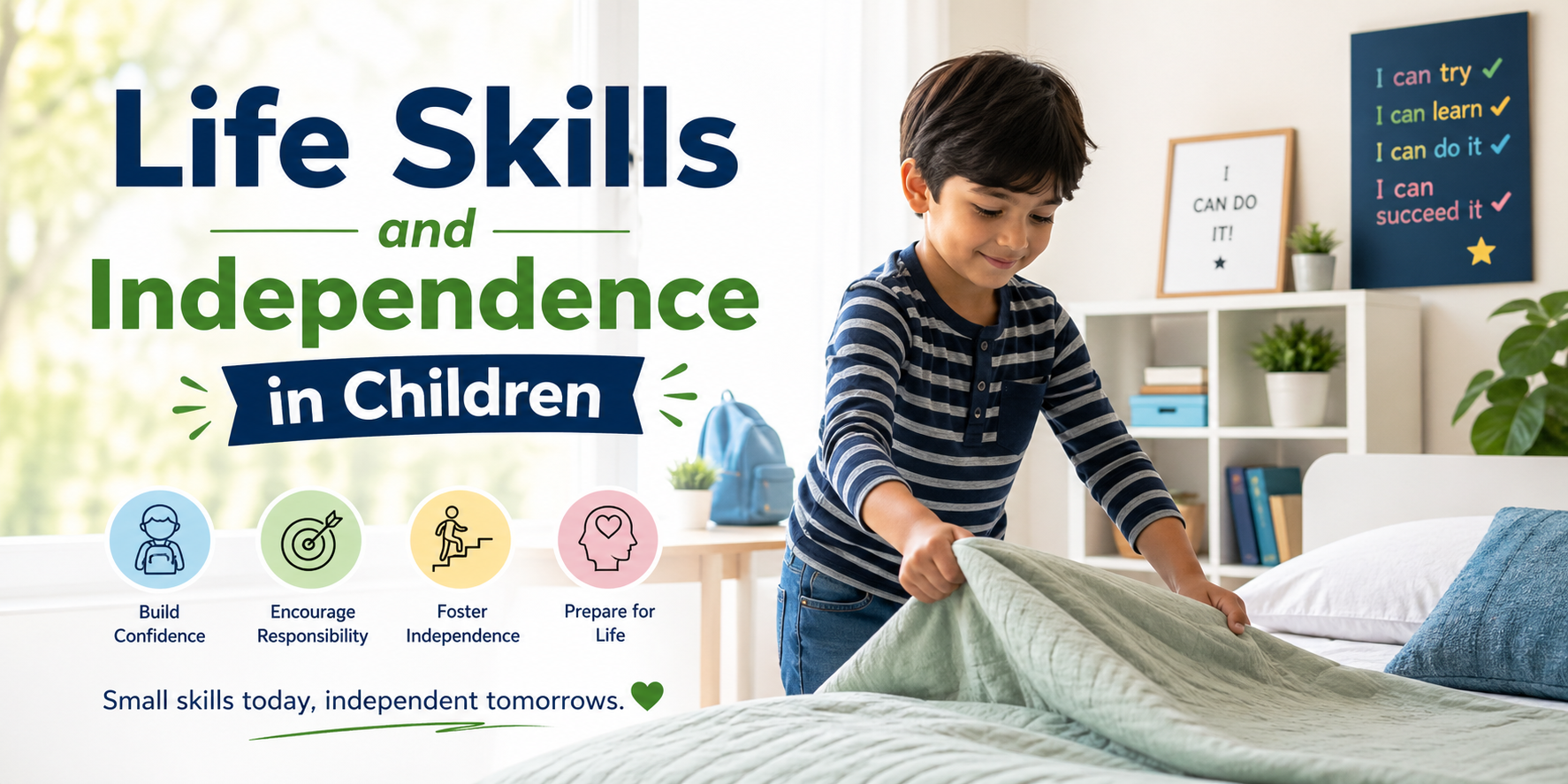
Independence is not something children suddenly develop—it is built through small daily habits. Teaching life skills helps children become more confident, responsible, and capable of handling everyday tasks on their own.
What Are Life Skills?
Life skills are simple daily activities that allow children to take care of themselves. These include:
* Eating on their own
* Getting dressed
* Using the toilet
* Following basic instructions
* Expressing their needs
These skills are essential for both personal growth and daily functioning.
Why Life Skills Matter
* Promotes independence – Children learn to do things without constant help
* Builds confidence – Small achievements make them feel capable
* Improves daily routine – Makes everyday life smoother for both child and parents
* Supports social development – Helps children adjust better in school and public settings
Key Skills to Focus On
* Self-feeding and handling food
* Dressing and basic grooming
* Toileting and hygiene
* Listening and following instructions
* Communication skills
How Parents Can Help
* Start with small, simple tasks
* Teach step-by-step instead of all at once
* Maintain a consistent routine
* Encourage effort, not perfection
* Give children time to try on their own
When to Seek Help
If your child finds it difficult to perform basic daily tasks or shows delayed independence, early support can make a big difference. Professional guidance, such as occupational therapy, can help build these essential skills effectively.
Conclusion
Life skills are the foundation of a child’s independence. With patience, practice, and the right support, every child can learn to become more confident and self-reliant.