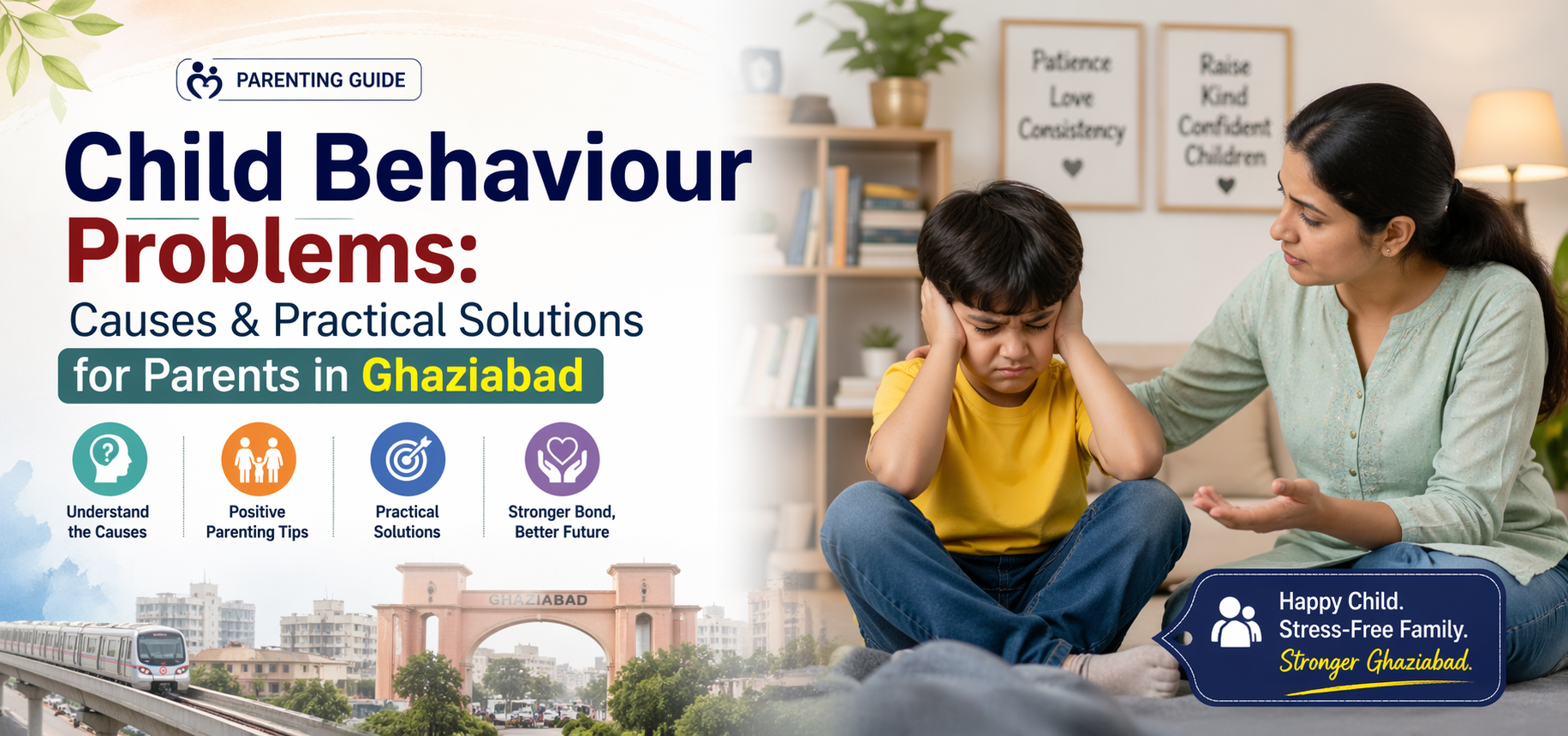
Every child shows different behaviours while growing up. Some children may become stubborn, throw tantrums, or show aggressive reactions. While occasional behaviour changes are normal, repeated or intense behaviour issues can affect a child’s learning, relationships, and daily life.
At Neuro Blooms, we understand that parents often feel confused about what is normal and when to seek help. This guide will help you understand child behaviour problems and how to manage them effectively.
What Are Behaviour Problems in Children?
Behaviour problems refer to actions that are challenging, repetitive, or difficult to manage. These behaviours may interfere with a child’s daily routine, learning, or social interaction.
Common Behaviour Issues:
* Frequent tantrums or meltdowns
* Aggressive actions (hitting, biting, pushing)
* Not following instructions
* Hyperactivity or impulsiveness
* Difficulty adjusting to routines
What Causes Behaviour Problems?
Understanding the reason behind behaviour is the first step toward managing it.
1. Communication Difficulties
Children who cannot express their needs clearly may show frustration through behaviour.
2. Sensory Challenges
Some children feel overwhelmed by sounds, lights, or touch, leading to sudden reactions.
3. Changes in Routine
Unexpected changes can make children feel insecure and trigger behaviour issues.
4. Attention-Seeking Behaviour
Children may act out when they need attention but don’t know how to ask for it.
5. Developmental Delays
Speech delays, autism, or ADHD can also affect behaviour patterns.
Practical Solutions to Improve Behaviour
Parents play a very important role in shaping a child’s behaviour. Here are simple and effective strategies you can start at home:
✔ Stay Calm and Consistent
Your reaction teaches your child how to respond. Stay calm and avoid shouting.
✔ Set CLear RuleS
Use simple instructions like “Sit down” or “Keep your toys here.”
✔ Follow a Daily Routine
A predictable routine helps children feel secure and reduces behaviour issues.
✔ Use Positive Reinforcement
Praise good behaviour immediately:
* “Good job for listening!”
* “I like how you shared your toys.”
✔ Identify Triggers
Observe what causes the behaviour—hunger, tiredness, or overstimulation.
✔ Limit Screen Time
Excess screen time can increase irritability and reduce attention span.
When Should You Seek Professional Help?
It’s important to consult a specialist if:
* Behaviour is frequent and intense
* The child becomes aggressive regularly
* There is no eye contact or response to name
* The child struggles with communication
* Behaviour affects school or daily life
Early support can make a big difference in your child’s development.
How Therapy Can Help
At Neuro Blooms, we provide behaviour therapy and occupational therapy in Ghaziabad & Delhi NCR to help children:
* Improve emotional control
* Learn positive behaviours
* Develop communication skills
* Build independence
We also guide parents with easy strategies to continue progress at home.
Conclusion
Behaviour problems are not just “bad habits”—they are often a way for children to express their needs. With the right understanding, patience, and support, every child can improve and grow confidently.
If you are concerned about your child’s behaviour, early intervention can help create a positive and lasting change.